Available 7 Days/Week       MON - FRI  8am - 7pm       SAT - SUN  10am – 6pm
Call us (407) 955-4575
Apply Now

Category: Mortgage Florida

Category Added in a WPeMatico Campaign

What Experts Forecast for Mortgage Rates and Home Prices in 2027

What Experts Forecast for Mortgage Rates and Home Prices in 2027 Simplifying The Market

When it comes to housing, two of the biggest questions on everyone’s mind right now are:

  1. What’s next for mortgage rates?

  2. Where will home prices go from here?

And if you’re weighing whether to move in the next few months or wait until 2027, here’s what you should know.

When experts look ahead to 2027, they see a steady housing market. No wild swings. No big surprises. Just a calmer, more balanced market.

And steady makes planning a whole lot easier. Let’s break it down.

Rates Are Expected To Settle into a Steady Range

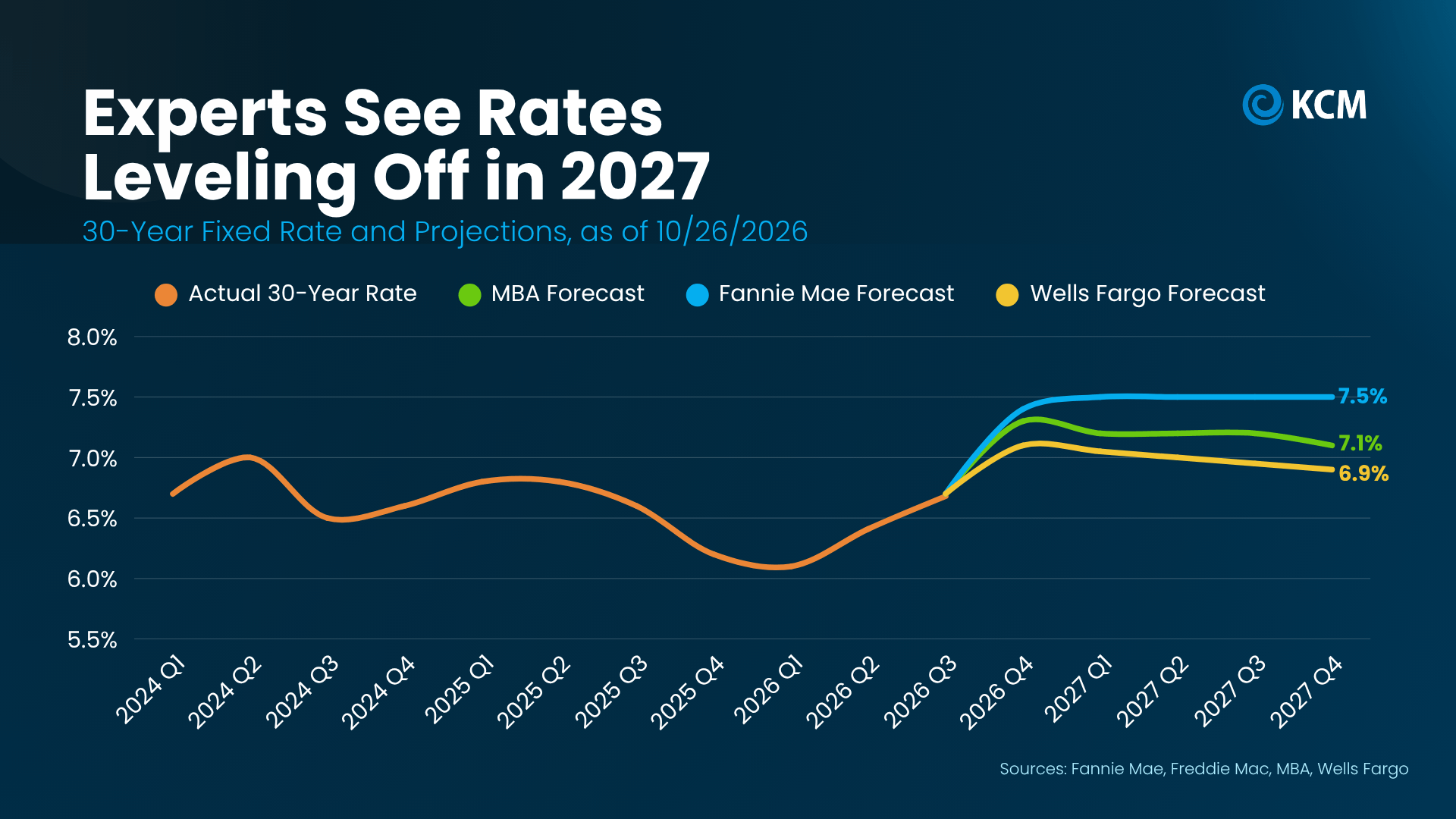
Lots of people are holding out for lower rates. But the latest forecasts from Fannie Mae, the Mortgage Bankers Association (MBA), and Wells Fargo show rates holding fairly flat through 2027 (see graph below):
a graph of a graph showing the number of the same time

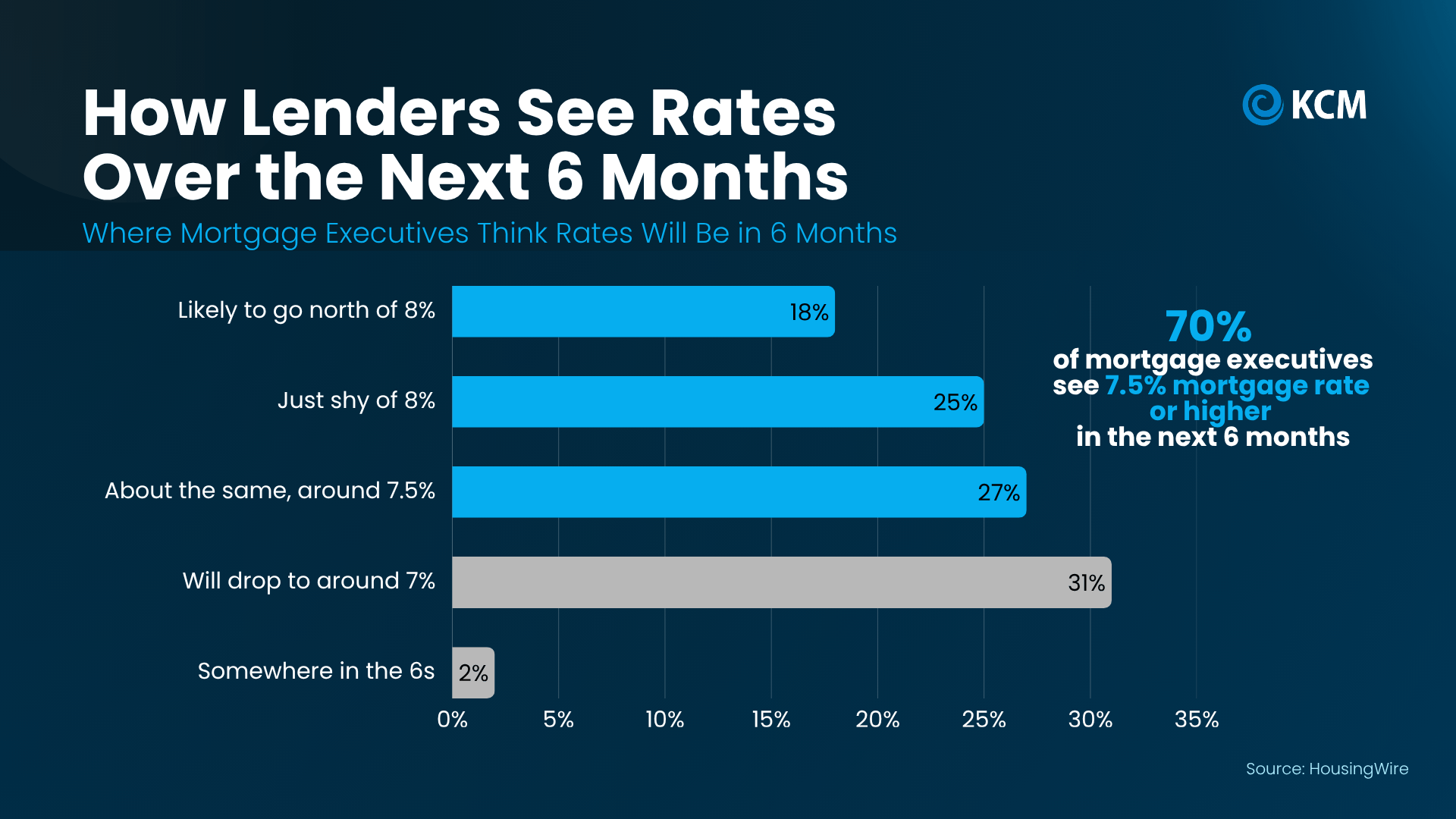
Lenders see it the same way. In a recent survey from HousingWire, 70% of mortgage executives said they expect rates to be around 7.5% or higher six months from now (see graph below):
a graph of percentages and numbers

And if you’re wondering why, the answer is fairly simple. Chen Zhao, Head of Economics Research at Redfin, says:

“Until the underlying economic fundamentals—everything from oil prices to AI–that are keeping rates high change, mortgage rates are unlikely to fall significantly.”

So what does that mean for you? Instead of trying to guess where rates go next, focus on what you can control. Even if rates don’t budge, there are still ways to get the best rate possible. When you talk with your lender, ask about:

  • Your credit score. Even a small bump in your score could help lower your rate.

  • Different loan types. Some programs offer lower rates or smaller down payments than you might expect.

  • Buying down your rate. Paying a little more upfront (called “points”) can lower your rate and your monthly payment.

That way, you’ll know exactly where you stand and what a comfortable monthly payment looks like for you. 

Prices Should Keep Climbing, Just More Slowly

But what about prices? Here’s where steady really works in your favor. 

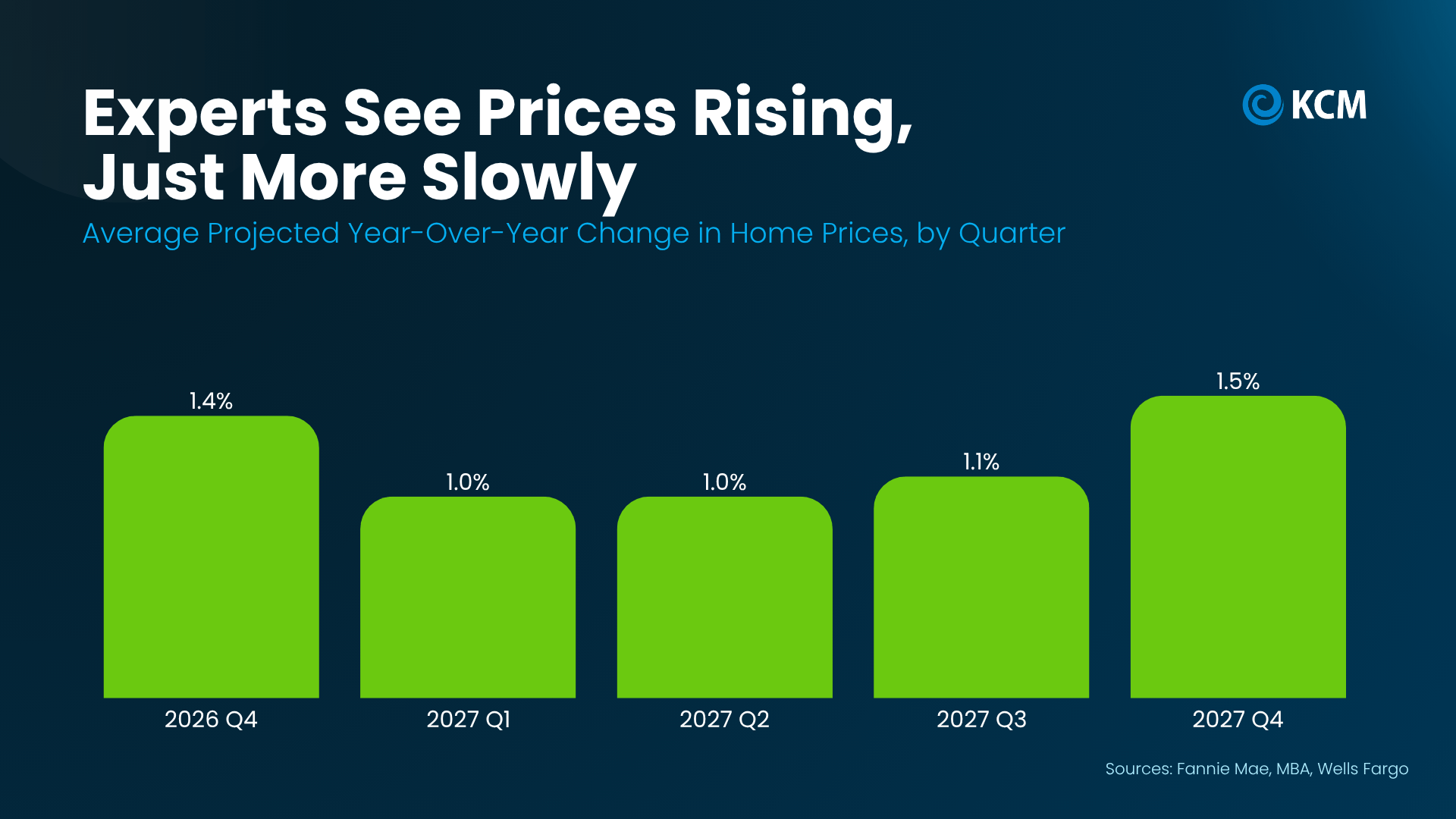
Experts don’t see a home price drop coming. On average, forecasts from Fannie Mae, MBA, and Wells Fargo show prices rising about 1% to 1.5% a year through 2027 (see graph below):
a graph of a number of green squares

In plain terms, in most places prices are still going up, just not as fast. For sellers, that means your home should hold onto its value. For buyers, slower growth gives you a little more breathing room. Just don’t count on prices getting cheaper while you wait.

But keep in mind, these are national forecasts. Prices can look very different from one area to the next, so what matters most is what’s happening where you live.

The Best Time To Move Is When It Fits Your Life

When the market is steady, you don’t have to try to time it perfectly. There’s no big swing to wait out.

That puts the focus back on you. Maybe you need more space for a growing family. Maybe you’re ready for less upkeep. A steady market makes it easier to plan for either one.

Bottom Line

If you’re asking yourself should you move now or wait? You should know experts see a steady market through 2027, with rates holding near today’s levels and prices rising slowly. 

So, rather than waiting for a big shift that may not come, connect with a local real estate agent and run the numbers on what a move looks like at today’s rates and prices, so you can decide based on your goals instead of the headlines.

#fidelityhomegroup, #floridamortgage, #floridamortgagerates, #mortgageflorida

The Home Insurance Move That Could Save You $440 a Year

The Home Insurance Move That Could Save You $440 a Year Simplifying The Market

When you’re planning a move, every monthly cost counts. That’s why it can be frustrating to see home insurance keep creeping up. According to Intercontinental Exchange, it now makes up 9.6% of the average monthly mortgage payment. 

But the latest numbers show some progress on that front – as the increases start to slow down. Here’s what you need to know and what you can do about it.

Premiums Are Rising More Slowly Now

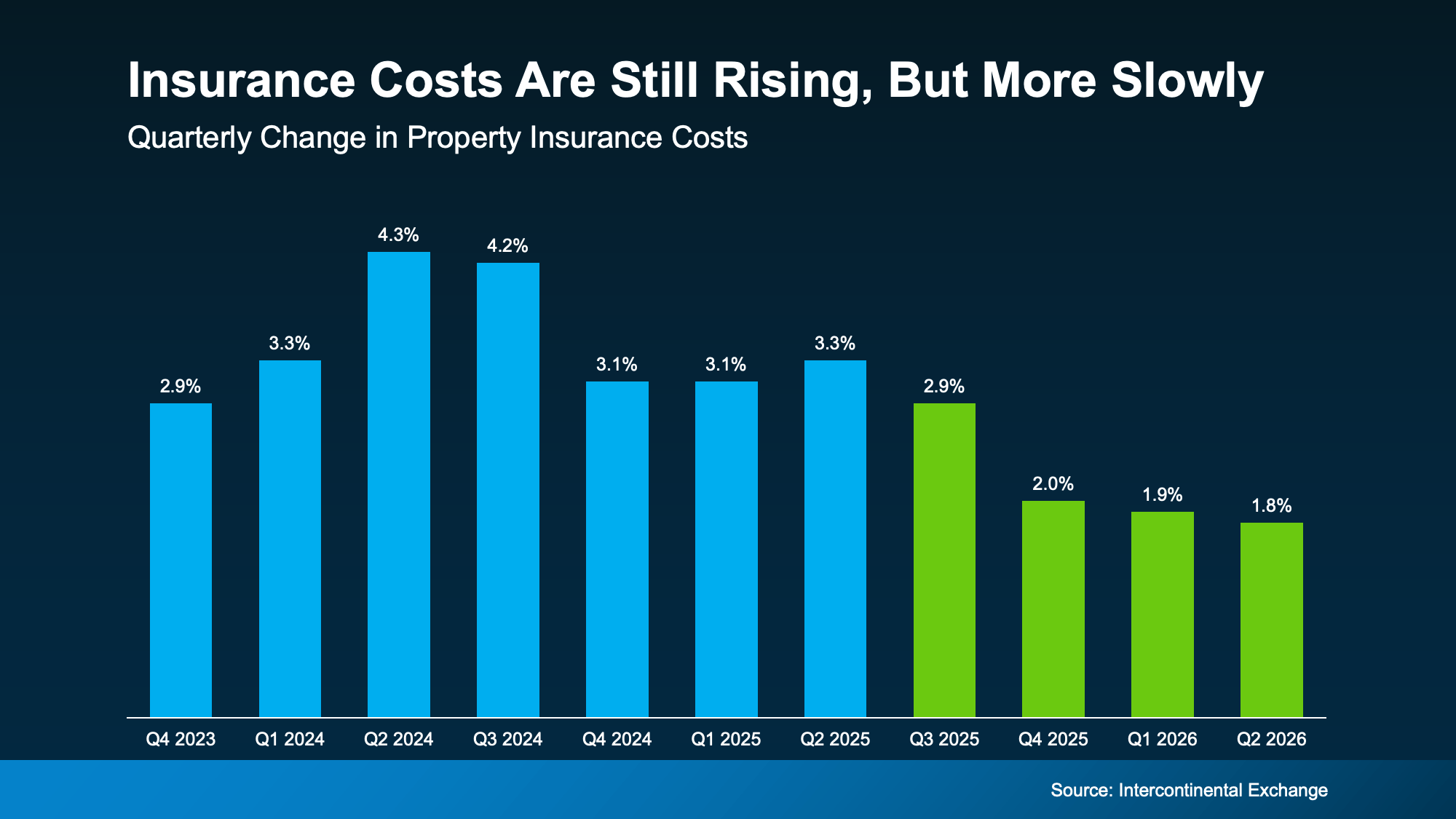
A look at the past two years shows how much things have cooled down. In mid-2024, home insurance premiums rose 4.3% in a single quarter. By the second quarter of this year, that was down to 1.8%. That’s the smallest quarterly growth in almost 3 years – and that’s a good thing (see graph below):

a graph of blue and green bars

As Andy Walden, Head of Mortgage and Housing Market Research at Intercontinental Exchange, explains:

“Property insurance has been a fast-growing component of the monthly mortgage payment, but this quarter’s data shows the pace of increase is finally slowing.”

While your premium will likely still go up over time, it may not climb as quickly as it did a couple of years ago. And that’s, at the very least, a step in the right direction.

Shopping Around Can Pay Off

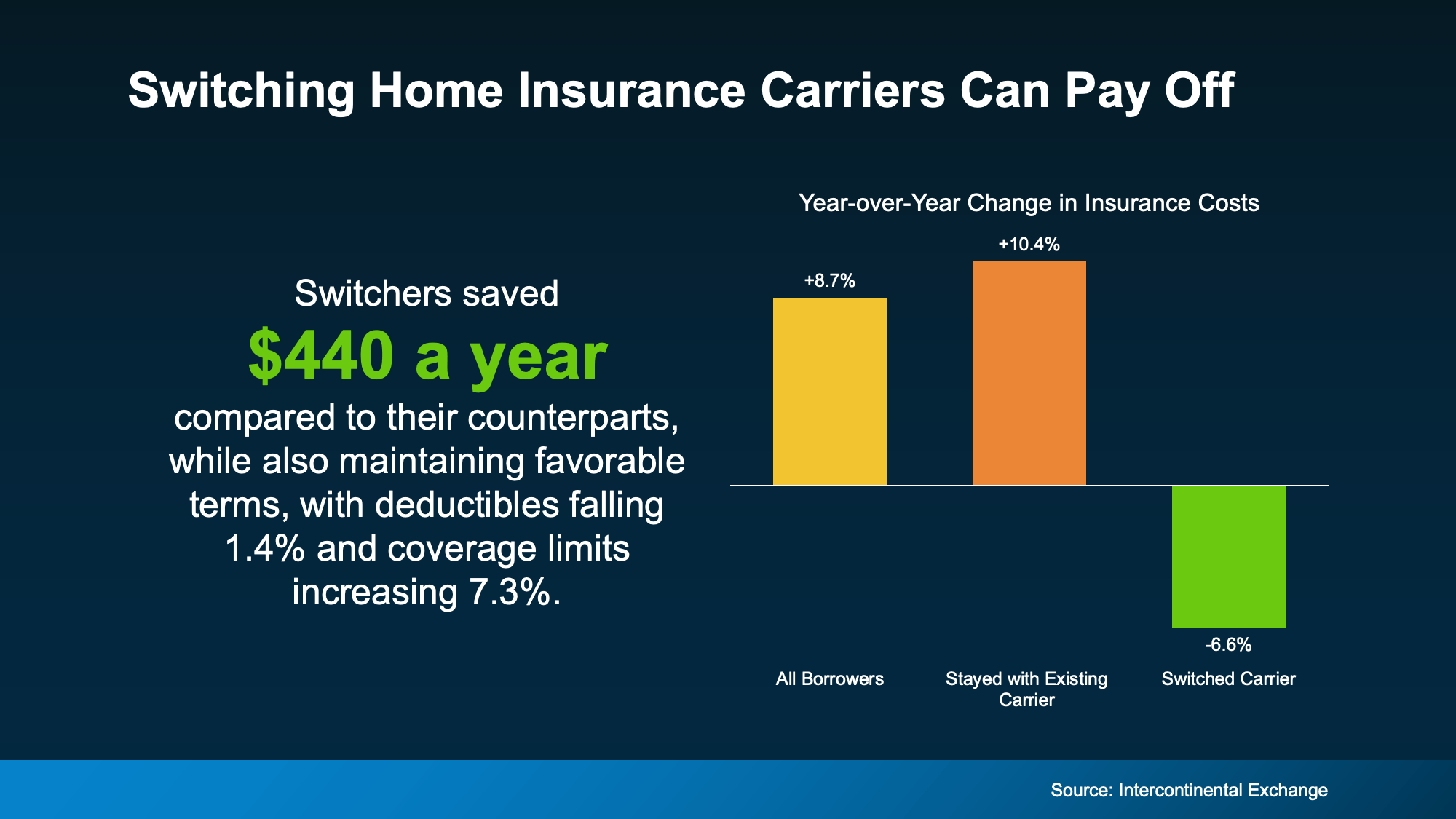
Here’s where you have some say in what you pay. Let’s take current homeowners as an example. Intercontinental Exchange found that when homeowners shopped around and switched insurance companies, their premiums went down 6.6% on average. Those who stayed with their current company saw an increase of 10.4% (see graph below):

a graph of a number of people

Think about that. That’s a big difference and it goes to show that looking for a new provider can literally pay off. 

That works out to about $440 a year in savings for the people who switched. And they didn’t have to give up coverage to get it. Their deductibles dipped 1.4%, and their coverage limits actually rose 7.3%.

While this example is current homeowners, the same general idea applies for first-time buyers too. Shop around and get multiple quotes before you pick your insurance provider. Then, once you’re settled in, review your policy each year when it comes up for renewal. You’re not locked into the first price you get.

The Home You Choose Can Help, Too

The home itself plays a role as well. According to John Burns Research and Consulting (JBREC), newly built homes are 10% to 15% less expensive to insure than older ones nationally.

And while a brand-new home won’t necessarily be the right fit for every buyer, if you’re open to one, it could be one more way to keep your monthly insurance costs down.

Bottom Line

Home insurance is certainly a bigger part of the monthly costs than it used to be, and that can feel like just one more thing to juggle when you’re buying a home or moving. But knowing you have ways to keep it in check can take some of the pressure off. 

Compare a few options before you buy, revisit your policy each year, and lean on trusted local professionals as you plan for your next move.

#fidelityhomegroup, #floridamortgage, #floridamortgagerates, #mortgageflorida
Credit Scoring Is Changing: 3 Things Homebuyers Should Know

Credit Scoring Is Changing: 3 Things Homebuyers Should Know Simplifying The Market

Quick, what credit score do you need to buy a home? If a number pops into your head, there’s a pretty good chance it’s wrong. And the right answer is getting harder to pin down, because the way credit scores are determined and delivered is changing – for the better.

Here’s what you need to know in today’s changing credit climate.

#1  Most People Are Guessing 

Fannie Mae has been tracking consumer perceptions about mortgage requirements since 2015 and found that consumers consistently overestimated the minimum credit score lenders required to qualify for a mortgage. As recently as 2023, the average guess was 652.

In reality, the long-standing benchmark for loans backed by Fannie Mae and Freddie Mac is lower, at 620, and today even that isn’t a hard rule for every mortgage they back. 

Like the Fannie Mae research, a recent survey from Veterans United found consumers continue to overestimate what it takes to qualify for a home loan:

a blue and white survey

The takeaway? Guessing wrong can cost you. 

A renter who assumes their score is too low and they can’t qualify for a mortgage may never take steps to find out for sure.

#2  Credit Rules Are Changing

For decades, the mortgage industry relied on one set of scores – Classic FICO. Thanks to a push to promote competition, make credit scoring more inclusive, and help more Americans become homeowners, the Federal Housing Finance Agency (FHFA) has approved the use of new credit score models such as FICO 10T and VantageScore 4.0.

A different model can mean a different number for the same person. VantageScore says its model can score about 33 million adults that the Classic FICO’s model can’t. So the score you saw on an app last month may not be the one your lender pulls.

Remember: the models may be new, but the basics haven’t changed.

#3  Do Your Part And Partner With A Pro

Your credit score is important – no matter how it’s measured. Following the same basic rules will benefit your profile in the old and new score models:

a screen shot of a credit checklist

Because while credit models may change, the general advice for you to improve your score doesn’t. Financial awareness and consistency mixed with a little willpower can go a long way.

Bottom Line

Don’t make credit or homebuying decisions from a chart, an app, or a friend’s advice. With the rules shifting and so many misconceptions out there, it’s never too early to talk to a professional loan officer for advice on credit, budgeting, and what it would take to qualify for a mortgage.

You may be closer to owning a home than you think.

#fidelityhomegroup, #floridamortgage, #floridamortgagerates, #mortgageflorida
Our home purchase qualifier helps you discover your mortgage options for unique properties. Whether it’s a condotel or an investment property, get a rate quote without sharing personal details. Get your rate. ? Link in bio #CondotelLoans #DSCRLoans #InvestmentPropertyFinance

Our home purchase qualifier helps you discover your mortgage options for unique properties. Whether it’s a condotel or an investment property, get a rate quote without sharing personal details. Get your rate. ? Link in bio #CondotelLoans #DSCRLoans #InvestmentPropertyFinance ? original sound – Fidelity Home Group® – undefined

#fidelityhomegroup, #floridamortgage, #floridamortgagerates, floridamortgagecalculator

Today we honor Nelson Mandela International Day — a powerful reminder of the impact one person can have on the world through courage and compassion. Let’s all take a moment to contribute to positive change in our communities. ?? #MandelaDay #Inspiration #ChangeMakers #Compassion #Community

Today we honor Nelson Mandela International Day — a powerful reminder of the impact one person can have on the world through courage and compassion. Let’s all take a moment to contribute to positive change in our communities. ?? #MandelaDay #Inspiration #ChangeMakers #Compassion #Community ? original sound – Fidelity Home Group® – undefined

#fidelityhomegroup, #floridamortgage, #floridamortgagerates, floridamortgagecalculator

Miami’s Iconic Condo Skyline

Start your home purchase qualifier with no personal info. Struggling to qualify for loans without traditional income proof? DSCR mortgages let your investment property’s cash flow do the talking. Use your property’s income, not your paystub. This program supports purchases and refinances with flexible down payments and credit requirements. Qualify with a minimum credit score of 660 and no personal income verification—perfect if you rely on rental income or own an LLC. Understand the clear rules on down payments, reserve requirements, and loan limits. Get your rate and see how DSCR programs can work for your investment goals. Get your rate now. ? Link in profile #DSCRMortgage #InvestmentPropertyLoan #FloridaRealEstate #Condotel #RealEstateInvesting

#fidelityhomegroup, #floridamortgage, #floridamortgagerates

When your mortgage approval feels like winning an Oscar!

Start your home purchase qualifier with no personal info to see how easy non-warrantable condo financing can be. Get your rate ? Link in profile #FloridaMortgage #NonWarrantableCondo #MortgageTips #FloridaRealEstate #InvestInFlorida

#fidelityhomegroup, #floridamortgage, #floridamortgagerates

FLorida Condos are growting

Start your home purchase qualifier with no personal info. Starting a Condo mortgage begins with development approval. This process helps qualify the property for financing and secures your investment in Florida’s growing market. We guide you through each step, so you can focus on your new home. Get your rate today and move closer to ownership. ? Link in profile #CondotelMortgage #NoConventionalIncome #FloridaRealEstate

#fidelityhomegroup, #floridamortgage, #floridamortgagerates

Buying a Home? Here’s What You Should Know About Home Insurance Costs.

Buying a Home? Here's What You Should Know About Home Insurance Costs. Simplifying The Market

If buying a home is on your radar, you’ve probably been keeping an eye on mortgage rates and home prices. But don’t forget about homeowners insurance. 

Homeowners insurance has always been part of owning a home. But over the past few years, it’s become a larger expense for many homeowners – something that’s especially frustrating when affordability already feels tight.

The good news? While premiums are still rising, the latest data shows those increases are beginning to slow. Here’s what buyers should know.

Home Insurance Costs Have Gone Up

You’ve probably heard stories from friends or family about their premiums going up. And that’s not really a surprise when you consider data from the Pew Research Center shows 71% of homeowners say their insurance costs have gone up over the past few years.

While no one likes rising costs, knowing what to expect can help you plan ahead. Your first insurance payment is typically included in your closing costs, but after that it’ll become part of your monthly housing expenses.

Getting an insurance quote early can help you build a more realistic budget and avoid surprises later.

Premiums Are Rising, But Not as Fast as They Were

Most of the headlines focus on how home insurance is getting more expensive. And that’s true. But here’s the part that’s easy to miss.

Insurance premiums are still rising.

But they’re not rising as fast as they were.

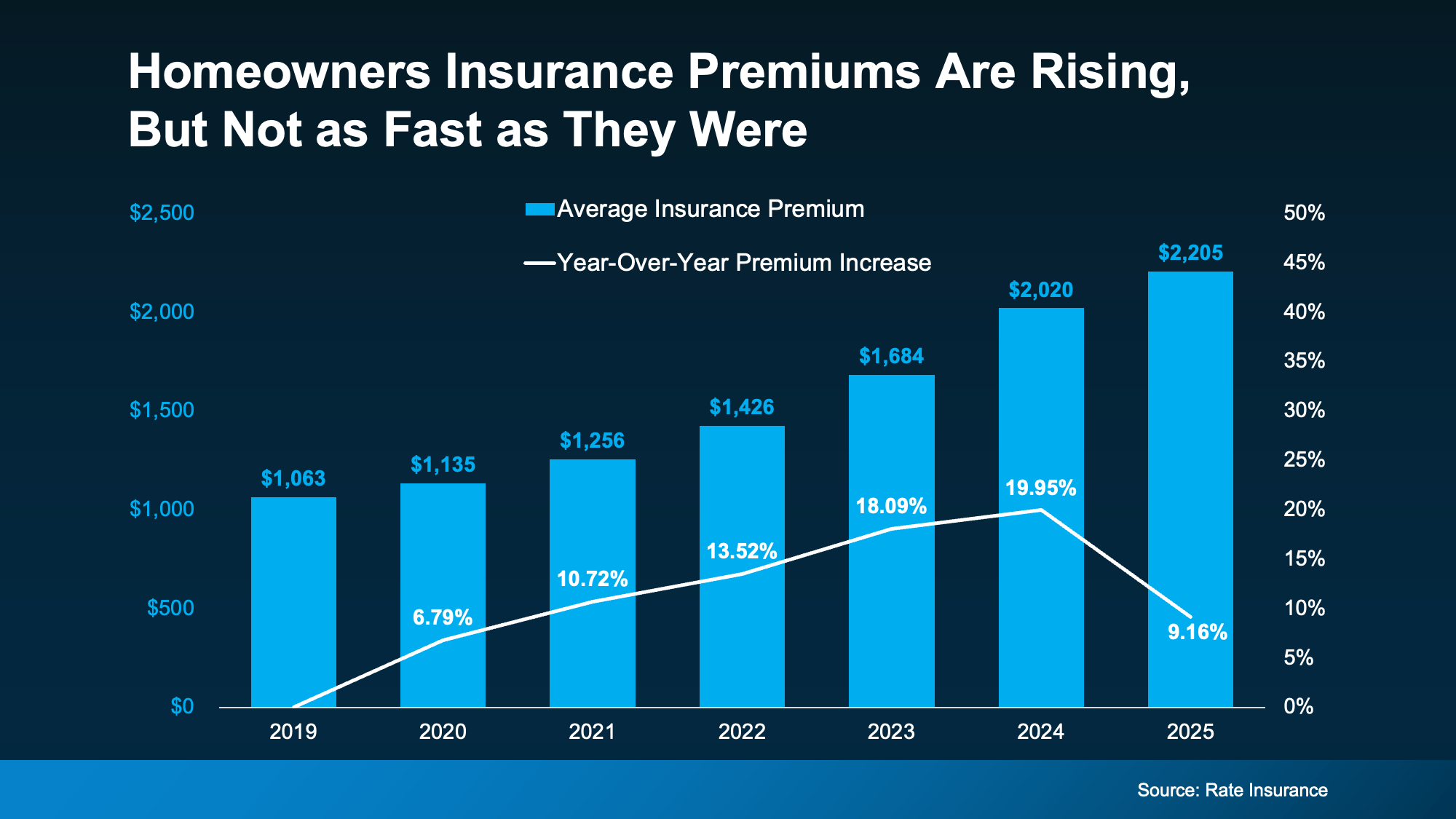
According to the latest report from Rate Insurance, 2025 saw the first slowdown in annual premium increases since 2019 (see graph below):

a graph of insurance coverage 

That doesn’t mean premiums are getting cheaper. It simply means the rapid increases of the past several years may finally be starting to ease – a small but welcome step in the right direction.

But what you’ll pay in one part of the country can look very different from what someone pays somewhere else.

Where You Buy Can Make a Big Difference

Insurance costs vary because some parts of the country experience more claims than others. That’s why it’s important to look at what’s happening locally.

Your premium will depend on things like where you’re buying, the home itself, and the coverage you choose.

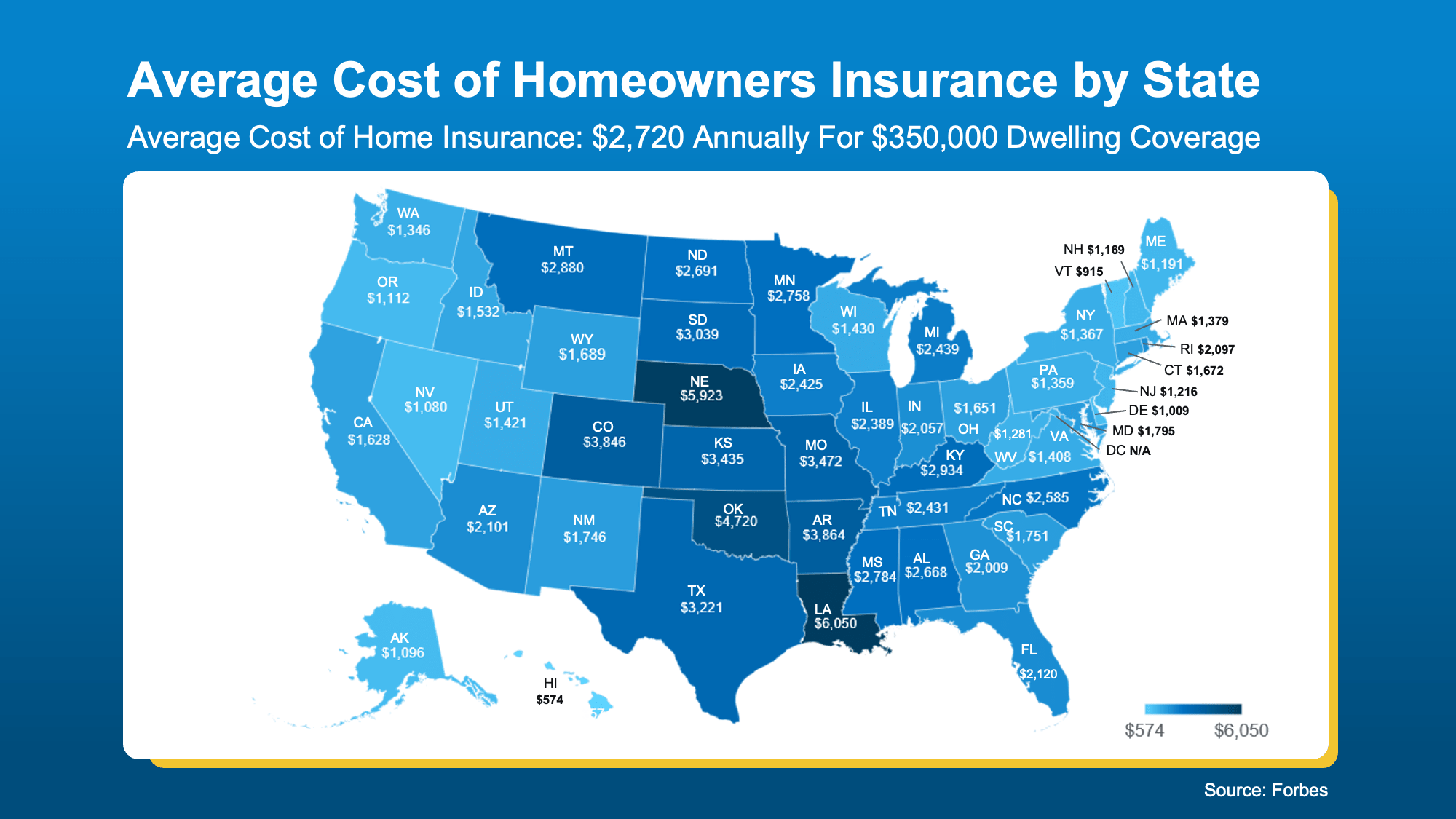
Forbes data can give a rough idea of your state’s typical premiums. Check out the map below – the darker the blue, the higher the costs tend to be in that state:

a map of the united states

Ways To Lower Your Costs

While you can’t control every cost that comes with buying a home, you can control how prepared you are. If you’re crunching the numbers and trying to find ways to save, Insurify and NerdWallet offer these tips that can help you get the best insurance price possible:

  • Shop Around – Compare quotes from multiple companies.

  • Bundle Policies – Combine home and auto to see if a bundle price is cheaper.

  • Ask If There Are Discounts – Don’t miss out on savings you may qualify for.

  • Highlight Upgrades – Features like a new roof or storm windows can cut costs.

  • Improve Your Credit – A stronger credit score can mean better premiums.

One of the smartest things you can do is get an insurance quote before you make an offer. That way, you’ll know what your monthly housing costs are likely to be before you commit.

An insurance professional can walk you through your options and help you find coverage that fits both your needs and your budget.

Bottom Line

Homeowners insurance has become a bigger part of the homebuying conversation. But it doesn’t have to become a bigger source of stress.

The key is knowing what to expect before you buy. Get an insurance quote early, factor it into your budget, and lean on trusted local professionals to help you make the most informed decision possible.

#fidelityhomegroup, #floridamortgage, #floridamortgagerates, #mortgageflorida

Home Price Growth Slowed Down. That May Be Changing.

Home Price Growth Slowed Down. That May Be Changing. Simplifying The Market

After more than a year of headlines talking about how home prices are going to crash, the latest data shows that price growth may be starting to pick back up again. And depending on whether you’re buying or selling, that shift means something different for you.

The Numbers May Be Starting To Turn

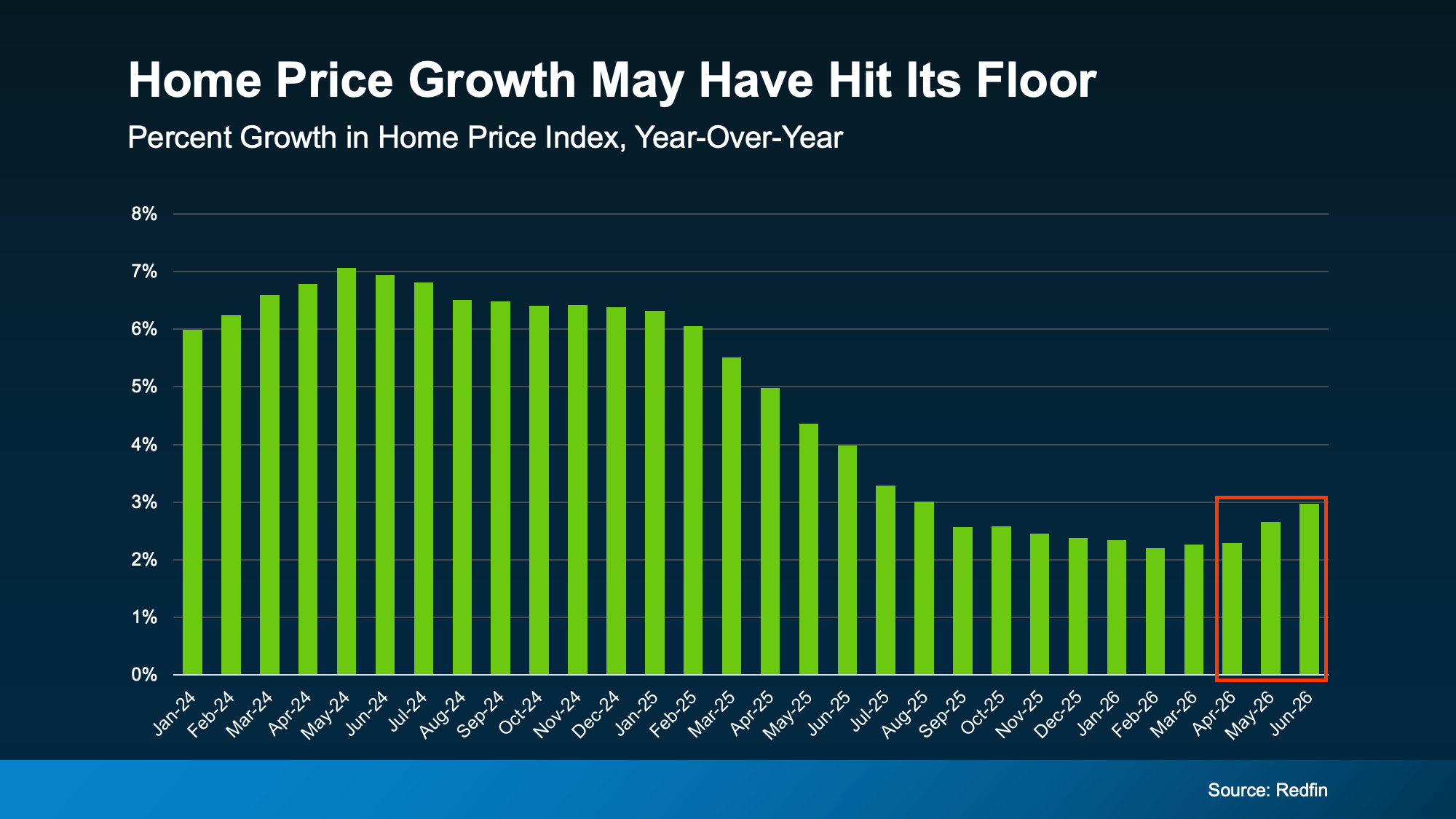
For the past couple of years, home price growth has been moderating – cooling from around 7% in mid-2024, according to Redfin (see graph below). But look at the right side of that graph. The pace of that growth appears to have hit its low point and started to turn.

a graph of growth in a number of years

While a couple months of data doesn’t necessarily mean this will be a lasting trend, there are some other signs that this could continue.

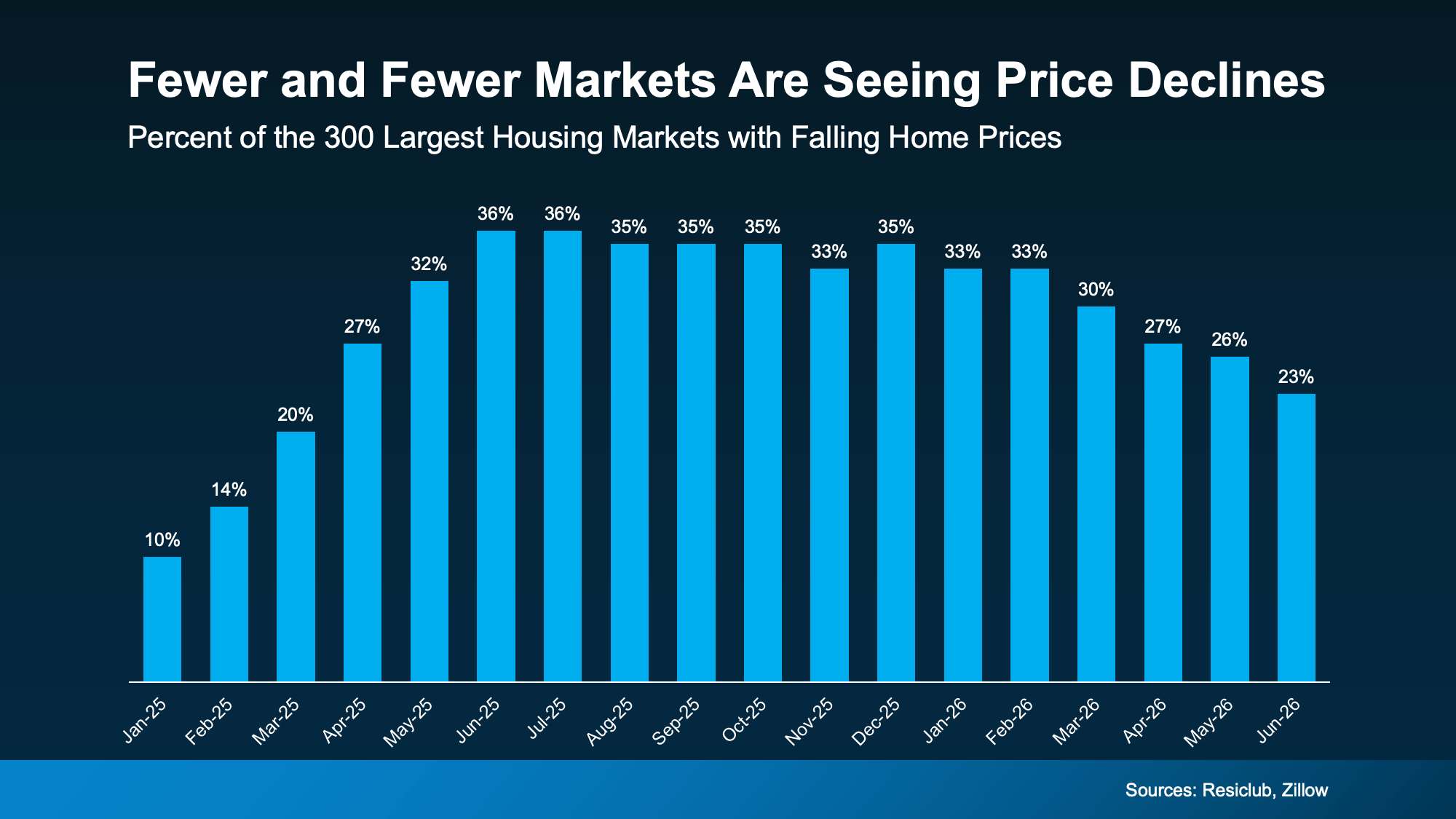
For example, fewer markets are seeing prices decline. According to ResiClub and Zillow, about 36% of the 300 largest housing markets had falling prices as of the middle of last year. Since the start of this year, that share has been shrinking. Now? Only 23% are experiencing those mild dips (see graph below):

a graph of the price of a house

When fewer markets see prices falling, that means more markets are seeing prices rise again.

And forecasts suggest this shift has room to run. On average, experts project home prices will rise about 2.3% nationally this year. And for that to happen, price growth would have to pick up a bit in the second half of 2026.

But Remember, Real Estate Is Local

While it looks like national prices may be starting to pick back up a tiny bit, that doesn’t mean that’s what’s happening in your neighborhood.

National home prices are really just an average of hundreds of local markets. Some are climbing faster. Others are still cooling. But one reason the national average may be looking up is because a growing number of metros may actually be net positive for prices this year.

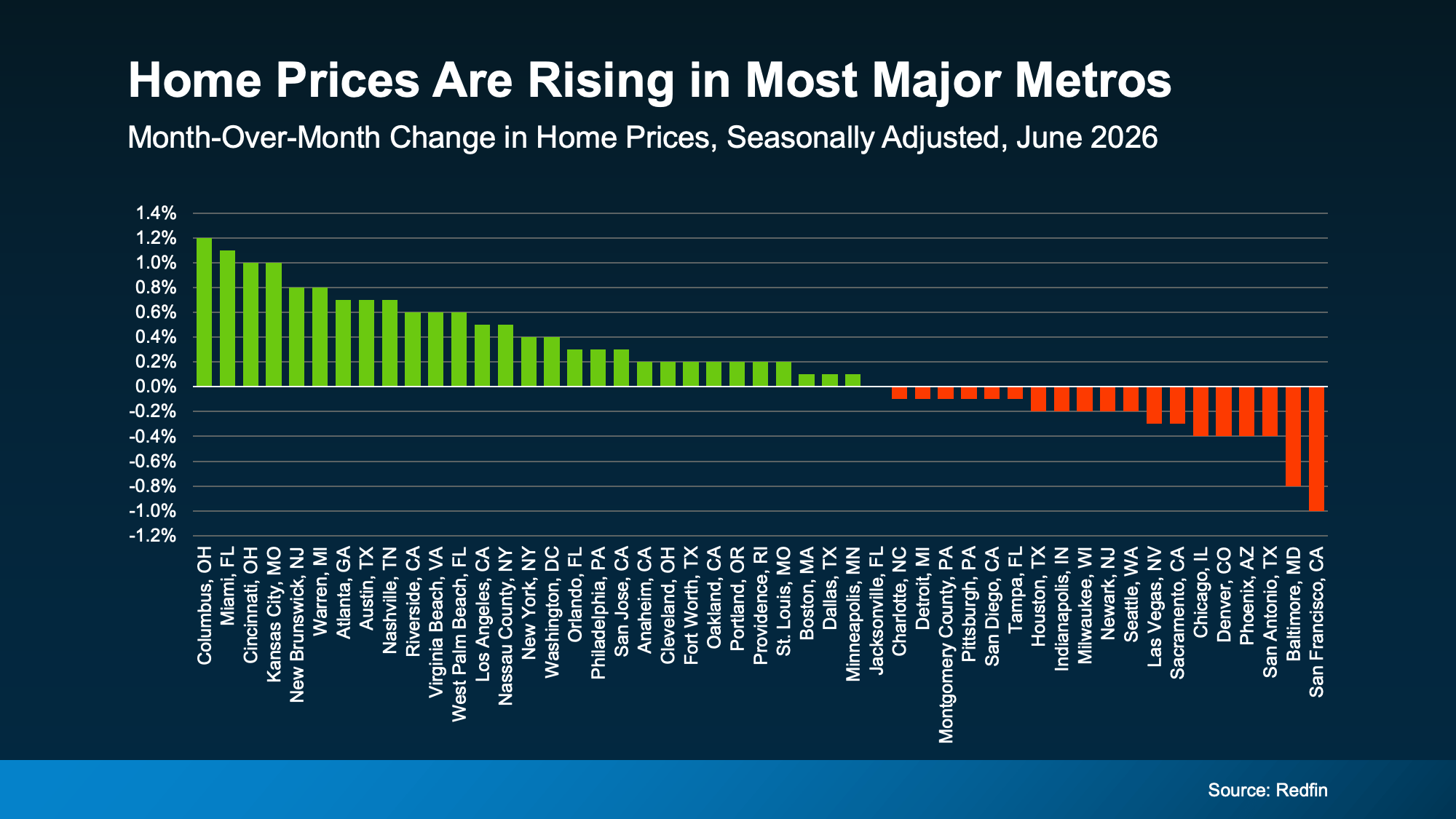
Not long ago, the major metros were split about 50/50 – half seeing prices rise and half seeing them fall. Now, that balance looks like it’s starting to tip in a more positive direction. Just last month, more than half of the major metros saw prices go up, according to Redfin (see graph below):

a graph of prices on a dark background

As Selma Hepp, Chief Economist at Cotality, explains:

“. . . local markets continue to tell very different stories. Annual home price growth has changed little since the start of the year, but some markets, especially those supported by strong job and income growth in the West and more affordable Midwest markets, have seen notable acceleration in price gains.”

What This Means for You

Home price headlines can be confusing because they don’t always tell the full picture. Lean on an agent to understand what’s happening in your local market and what the early signs say for where prices may go from here.

That’s the best way to stay one step ahead of the market.

If you’re buying: slower price growth has worked in your favor. You’ve had more room to negotiate and a budget you could plan around. If price growth is picking up in your area, buying now may mean paying less than you would later this year.

If you own a home: you’ve been gaining equity all along, even while growth moderated. If growth keeps picking up, those gains could speed up, too. Lawrence Yun, Chief Economist at the National Association of Realtors (NAR), projects the typical homeowner will gain roughly $16,000 in housing wealth this year. And if you’re thinking about selling, this shift is a good early sign for you. Just remember, the market is still pretty balanced and buyer-friendly in a lot of areas right now.

Home price growth slowed way down, and now it’s showing early signs of picking back up. Whether you’re buying or selling, let’s connect so you can see exactly what prices are doing in our local market and what that means for your plans.

Bottom Line

Home price growth slowed way down, and now it’s showing early signs of picking back up. Whether you’re buying or selling, connect with a local real estate agent so you can see exactly what prices are doing in your local market and what that means for your plans.

#fidelityhomegroup, #floridamortgage, #floridamortgagerates, #mortgageflorida