Available 7 Days/Week       MON - FRI  8am - 7pm       SAT - SUN  10am – 6pm
Call us (888) 259-2257
Apply Now

Category: Mortgage Rates

View daily mortgage and refinance interest rates for a variety of mortgage products, and learn how we can help you reach your home financing goals. Lower Your Monthly Payments. Compare Rates Now! What Else Can You Afford When You Lower Your Monthly Mortgage Payment? Pre-Vetted Lenders. Apply Faster. Real Rates. Objective & Free. Skip the Bank.

Florida Mortgage | What You Need To Know About Pre-Approval

Florida Mortgage | What You Need To Know About Pre-Approval Before you even start looking at homes, you should get pre-approved for your mortgage. It’ll give you clarity on what you can borrow and help you feel more confident in your ability to get a home loan. If you’re ready to get pre-approved, connect with a trusted lender to learn more. NMLS ID 1834853 #mortgagetips #floridamortgage #floridamortgagerates #floridamortgagecompany #mortgagepreapproval #homebuying Data Sources: https://www.bankrate.com/mortgages/pre-approval/benefits https://finance.yahoo.com/personal-finance/mortgages/article/mortgage-pre-approval-182545770.html https://myhome.freddiemac.com/blog/homebuying/how-do-i-get-pre-approved-mortgage

#fidelityhomegroup, #floridamortgage, #floridamortgagerates

Housing Market Forecasts for the Second Half of the Year

Housing Market Forecasts for the Second Half of the Year Simplifying The Market

From rising home prices to mortgage rate swings, the housing market has left a lot of people wondering what’s next – and whether now is really the right time to move. There is one place you can turn to for answers you want the most. And that’s the experts.

Leading housing experts are starting to release their projections for the rest of the year. These insights will give you clarity – and a little more optimism than you might expect. Business Insider sums up the forecasts (and why they’re good news for you):

“As mortgage rates go down this year, affordability may improve slightly for homebuyers. Inventory is also expected to grow, which should help moderate price growth and make finding a home easier.”

Let’s break it down.

1. Mortgage Rates Should Come Down (Slightly)

While a major drop isn’t on the table, forecasters are calling for a modest decline in rates in the months ahead as the economic outlook becomes more certain. Based on the information we have right now, here’s a look at where they say rates should be by year-end (see graph below):

a graph of interest rateEven this slight decrease is a welcome change. A seemingly small decline can still help bring down your future mortgage payment and give you a bit more breathing room in your budget.

Just remember, everything from inflation to employment and broader economic shifts will have an impact on where rates go from here. So, don’t try to time the market. And do expect some volatility along the way.

2. Inventory Will Continue To Grow

Inventory has already improved a lot this year. A big portion of the growth the market has already seen is because homeowners are getting tired of sitting on the sidelines. They’ve tried the wait and see approach with rates, and it hasn’t really paid off. And at a certain point, you need to move no matter what the market is doing. This is one reason more homes have been listed lately. And experts say that should continue. As Lance Lambert, Co-founder of ResiClub, says:

“The fact that inventory is rising year-over-year . . . strongly suggests that national active housing inventory for sale is likely to end the year higher.

If rate forecasts pan out as the experts say, that could be enough to tip some more sellers off the fence and back into the market – giving you even more options for your move.

3. Home Prices Are Moderating

As more homes hit the market, there will also be less upward pressure on home prices. Expert forecasts are still calling for growth, but the pace of that growth is slowing down as inventory climbs. The average of all 7 forecasts shows prices will rise about 2% this year (see graph below):

a graph of growth in green squaresThat means you could finally get a little bit of relief from rapidly rising home prices. When you combine the forecast for healthier price growth with projections for slightly lower mortgage rates, that could mean more buying power in the months ahead.

Keep in mind, though, the housing market is hyper-local. So, this is going to vary by area. Some markets will see prices climbing higher. And some may even see prices dip a little if inventory is up significantly in that location. So, lean on a local agent for insights into what’s happening in your area.

Bottom Line

So, if you want or need to move this year, know that the experts say things should start looking up. And an agent can help you take advantage of any market shifts that work in your favor.

#fidelityhomegroup, #floridamortgage, #floridamortgagerates, #mortgageflorida

What an Economic Slowdown Could Mean for the Housing Market

What an Economic Slowdown Could Mean for the Housing Market Simplifying The Market

Talk about the economy is all over the news, and the odds of a recession are rising this year. That’s leaving a lot of people wondering what it means for the value of their home – and their buying power.

Let’s take a look at some historical data to show what’s happened in the housing market during each recession, going all the way back to the 1980s. The facts may surprise you.

A Recession Doesn’t Mean Home Prices Will Fall

Many people think that if a recession hits, home prices will fall like they did in 2008. But that was an exception, not the rule. It was the only time the market saw such a steep drop in prices. And it hasn’t happened since, mainly because inventory is still so low overall. Even in markets where the number of homes for sale has started to rise this year, inventory is still far below the oversupply of homes that led up to the housing crash.

In fact, according to data from Cotality (formerly CoreLogic), in four of the last six recessions, home prices actually went up (see graph below)

a graph of a graph showing the price of falling pricesSo, don’t assume a recession will lead to a significant drop in home values. The data simply doesn’t support that idea. Instead, home prices usually follow whatever trajectory they’re already on. And right now, nationally, home prices are still rising, just at a more normal pace.

Mortgage Rates Typically Decline During Recessions

While home prices tend to stay on their current path, mortgage rates usually drop during economic slowdowns. Again, looking at data from the last six recessions, mortgage rates fell each time (see graph below):

a graph of a graph showing the rise of mortgage ratesSo, a recession means rates could decline. And while that would help with your buying power, don’t expect the return of a 3% rate.

Bottom Line

The answer to the recession question is still unknown, but the odds have gone up. However, that doesn’t mean you have to worry about what it means for the housing market – or the value of your home. Historical data tells us what usually happens.

If you’re wondering how the current economy is impacting your local market, connect with an agent.

#fidelityhomegroup, #floridamortgage, #floridamortgagerates, #mortgageflorida

What You Can Do When Mortgage Rates Are a Moving Target

What You Can Do When Mortgage Rates Are a Moving Target Simplifying The Market

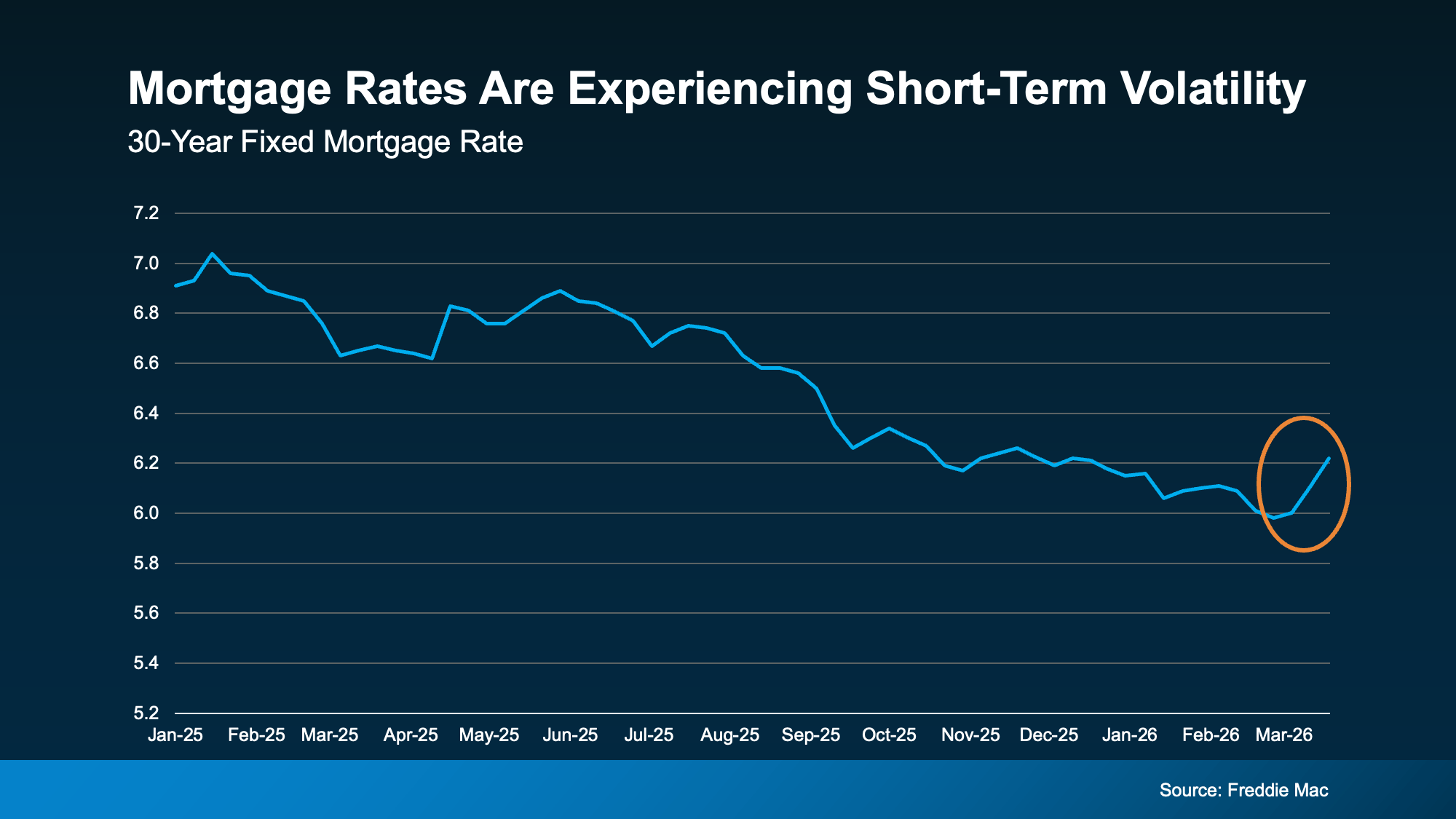
Have you seen where mortgage rates have been lately? One day they go down a little. The next day, they go back up again. It can feel confusing and even frustrating if you’re trying to decide whether now’s a good time to buy a home.

Take a look at the graph below. It uses data from Mortgage News Daily to show that after a relatively stable month of March, mortgage rates have been on a bit of a roller coaster ride in April:

This kind of up-and-down volatility is expected when economic changes are happening.

And that’s one of the reasons why trying to time the market isn’t your best move. You can’t control what happens with mortgage rates. But you’re not powerless. Even with all the economic uncertainty right now, there are things you can do.

You can control your credit score, loan type, and loan term. That way, you can get the best rate possible in today’s market.

Your Credit Score

Your credit score can really affect the mortgage rate you qualify for. Even a small change in your score can make a big difference in your monthly payment. Like Bankrate says:

“Your credit score is one of the most important factors lenders consider when you apply for a mortgage. Not just to qualify for the loan itself, but for the conditions: Typically, the higher your score, the lower the interest rates and better terms you’ll qualify for.”

Keeping your credit score up is key when it comes to qualifying for a home loan. If you’re not sure where your score stands or how to improve it, talk to a loan officer you trust.

Your Loan Type

There are also different types of loans out there, and each one comes with unique requirements for qualified buyers. The Consumer Financial Protection Bureau (CFPB) explains:

“There are several broad categories of mortgage loans, such as conventional, FHA, USDA, and VA loans. Lenders decide which products to offer, and loan types have different eligibility requirements. Rates can be significantly different depending on what loan type you choose. Talking to multiple lenders can help you better understand all of the options available to you.

Always work with a mortgage professional to figure out which loan makes the most sense for you and your financial situation.

Your Loan Term

Just like there are different loan types, there are also different loan terms. Freddie Mac puts it like this:

“When choosing the right home loan for you, it’s important to consider the loan term, which is the length of time it will take you to repay your loan before you fully own your home. Your loan term will affect your interest rate, monthly payment, and the total amount of interest you will pay over the life of the loan.

Most lenders typically offer 15, 20, or 30-year conventional loans. Be sure to ask your loan officer what’s best for you.

Bottom Line

You can’t control what’s happening with the economy or mortgage rates, but you can take steps that’ll help you get the best rate possible.

Connect with a local real estate agent and a lender to talk about what you can do today to put yourself in a strong spot for when you’re ready to buy a home.

#fidelityhomegroup, #floridamortgage, #floridamortgagerates, #mortgageflorida

A Recession Doesn’t Mean a Housing Crisis

A Recession Doesn’t Mean a Housing Crisis Simplifying The Market

a screenshot of a graph

Some Highlights

  • There’s a lot of talk about a recession lately and how the odds of one are rising. If you’re wondering what that means for the housing market, here’s what the data tells us.
  • While you may remember the price crash in 2008, that’s not the norm. Looking back all the way to 1980, home prices usually rise and mortgage rates tend to fall. 
  • If you have questions about buying or selling a home in today’s market, connect with a real estate agent.

#fidelityhomegroup, #floridamortgage, #floridamortgagerates, #mortgageflorida

4 Things To Expect from the Spring Housing Market

4 Things To Expect from the Spring Housing Market Simplifying The Market

Spring is in full swing, and the housing market is picking up along with it. And if you’ve been wondering whether now is the right time to buy or sell, here’s the inside scoop on why this spring may be a great time to make your move.

1. There Are More Homes for Sale

After a long stretch of tight inventory, the number of homes for sale is finally improving. According to recent national data from Realtor.com, active listings are up 27.5% compared to this time last year.

Look at the graph below and follow the green line for 2025. You can see, even though inventory levels still haven’t returned to pre-pandemic norms (shown in gray), that number is higher than it has been going into the spring market over the past few years (see graph below):

Buyers: This means you have more choices, and you can be more selective.

Sellers: With more homes available than in recent years, you’re more likely to find what you’re looking for when you move. And knowing that inventory is still below more normal levels means there will be demand for your home when you sell it, too.

2. Home Price Growth Is Moderating

As inventory grows, the pace of home price growth is slowing down – and that will continue into the spring market. This is because prices are driven by supply and demand. When there are more homes for sale, buyers have more options, so there’s less competition for each house. Rising supply and less buyer competition causes price growth to slow, but it should still remain positive in most markets. As Freddie Mac says:

“In 2025, we expect the pace of house price appreciation to moderate from the levels seen in 2024, while still maintaining a positive trajectory.”

And while prices aren’t dropping at the national level, every market is different. Some areas are seeing stronger price growth, while others are cooling off or even seeing some price declines.

Buyers: The slower pace of growth means prices aren’t rising as quickly as before – and that’s a relief. Any home you buy now is likely to appreciate in value over time, helping you build equity.

Sellers: While prices are still rising, you might need to adjust your expectations. Overpricing your house in a more balanced market could mean it takes longer to sell. Pricing your house competitively is going to be key to attracting offers.

3. Mortgage Rates Are Stabilizing

One of the biggest hurdles for buyers over the past couple of years has been high, volatile mortgage rates. But there’s some good news – overall, they’ve stabilized in recent weeks – and have even declined a bit since the beginning of this year. And while that decrease hasn’t been a big drop, stabilizing mortgage rates has helped make buying a home a bit more predictable. According to Selma Hepp, Chief Economist at CoreLogic:

“With the spring homebuying season upon us, the recent improvements in mortgage rates may help invite homebuyers back into the market.”

Buyers: When mortgage rates are more stable, it’s easier to plan ahead because you have a better idea of what your future payment might be. But remember, rates will continue to be volatile. So, lean on your agent and your lender to make sure you know what the latest mortgage rate means for you.

Sellers: Slightly lower rates that are starting to stabilize are encouraging more buyers to move forward with their plans. That’s good for demand when you’re planning to sell your house.

4. More Buyers Are Returning

With more inventory, slowing price growth, and stabilizing mortgage rates, buyers are gaining confidence and coming back into the market. Demand is picking up, and data from the Mortgage Bankers Association (MBA) shows an increase in mortgage applications compared to the start of the year (see graph below):

Buyers: Acting sooner rather than later could be a smart move before your competition heats up even more.

Sellers: This is great news for you – more buyers mean a better chance of selling your house quickly.

Bottom Line

Do you have questions about what the spring market means for you? Connect with a local real estate agent and talk about how to craft your plan this season.

With more homes for sale, slowing price growth, and stabilizing mortgage rates, how will this impact your decision to buy or sell this spring?

#fidelityhomegroup, #floridamortgage, #floridamortgagerates, #mortgageflorida

Florida Mortgage | Do You Know What Your House Is Really Worth?

Florida Mortgage | Do You Know What Your House Is Really Worth? Over the past 5 years, home prices have risen dramatically – and that means your home’s value has grown too. If you’re interested in finding out how much your home is worth in today’s market, let’s connect. ?The number may surprise you. NMLS ID 1834853 #floridamortgage #floridamortgagerates #floridamortgagecompany #homevalue #homevalues

#fidelityhomegroup, #floridamortgage, #floridamortgagerates

Florida Mortgage | Is It Better To Rent or Buy a Home Today?

Florida Mortgage | Is It Better To Rent or Buy a Home Today? A study shows that 70% of prospective buyers fear the long-term consequences of renting, including rent rising and missing out on the equity homeowners gain through the years. NMLS ID 1834853 #floridamortgage #floridamortgagerates #floridamortgagecompany #rentvsbuy

#fidelityhomegroup, #floridamortgage, #floridamortgagerates

Florida Mortgage | Should I Update My House Before I Sell It?

Florida Mortgage | Should I Update My House Before I Sell It? With more homes for sale and buyers being more selective, it’s smart to make strategic updates now so your house stands out. But with only a month left before spring, you need to prioritize projects that’ll have an impact. Let’s connect so you know how to prioritize what’s really worth your time, money, and effort. NMLS ID 1834853 #floridamortgage #floridamortgagerates #floridamortgagecompany #homeupdates

#fidelityhomegroup, #floridamortgage, #floridamortgagerates

Florida Mortgage | Why You’ll Love Owning a Home

Florida Mortgage | Why You’ll Love Owning a Home Here are a few reasons it’s so easy to fall in love with homeownership: the sense of accomplishment, freedom of expression, and the chance to build wealth. Let us know: what’s your #1 reason for wanting to buy? NMLS ID 1834853 #floridamortgage #floridamortgagerates #floridamortgagecompany #homeownership #buyingahome

#fidelityhomegroup, #floridamortgage, #floridamortgagerates